


 执行部署的TensorRT加速引擎

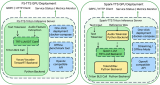
很多开发人员在转换完 TensorRT 加速引擎之后,最后准备调用起来执行推理任务的时候,就遇到一些障碍。这个环节是需要开发人员自行撰写相关代码,去执行读入数据(前处理)、执行推理、显示结果(后处理)等工作,如下图最右边的部分。
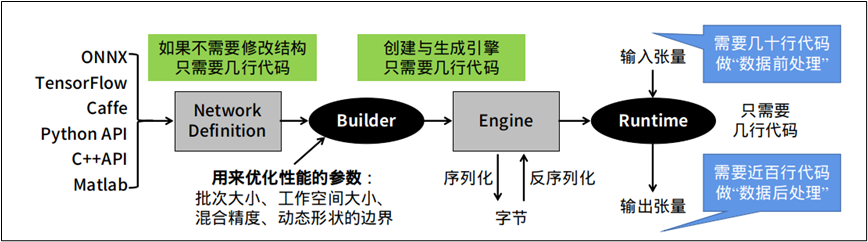
这部分的麻烦之处,在于每个神经网络的结构不相同,并没有“通用”的代码可以适用于大部分的网络结构,需要针对指定神经网络去撰写对应的代码,最重要是需要清除这个模型的输入 (input bold) 与输出 (outpold) 的名称与张量结构。
本文以前面在 TAO 工具套件中使用的 ssd 神经网络为范例,提供基础的“前后处理”范例代码给读者参考,这是从 NVIDIA 中国区开发者社区所举办过多届 “Sky 黑客松”比赛中,所提供的开源内容中提取的重点,主要如下:
1、数据前处理:
def _preprocess_trt(img, shape=(300, 300)):"""TRT SSD推理前的数据前处理"""img = cv2.resize(img, shape)img = img.transpose((2, 0, 1)).astype(np.float32)returnimg
这里 “shape=(300,300)” 为张量的尺度,根据模型训练时的长宽两个变量,至于 transpose 里的 (2,0,1) 是固定的,不需调整。
2、数据后处理:
def _postprocess_trt(img, output, conf_th, output_layout):"""TRT SSD推理后的结果的数据处理步骤."""img_h, img_w, _ = img.shapeboxes, confs, clss = [], [], []for prefix in range(0, len(output), output_layout):index = int(output[prefix+0])conf = float(output[prefix+2])if conf < conf_th:continuex1 = int(output[prefix+3] * img_w)y1 = int(output[prefix+4] * img_h)x2 = int(output[prefix+5] * img_w)y2 = int(output[prefix+6] * img_h)cls = int(output[prefix+1])boxes.append((x1, y1, x2, y2))confs.append(conf)clss.append(cls)returnboxes,confs,clss#返回标框坐标、置信度、类别
这里最重要的 x1, y1,x2, y2 坐标值,必须根据 SSD 神经网络所定义的规范去进行修改,其他部分可以通用于大部分神经网络。
3、定义 TrtSSD 类封装运行 TRT SSD 所需的东西:
class TrtSSD(object):# 加载自定义组建,如果TRT版本小于7.0需要额外生成flattenconcat自定义组件库def _load_plugins(self):if trt.__version__[0] < '7':ctypes.CDLL("ssd/libflattenconcat.so")trt.init_libnvinfer_plugins(self.trt_logger, '')#加载通过Transfer Learning Toolkit生成的推理引擎def _load_engine(self):TRTbin = 'ssd/TRT_%s.bin' % self.model #请根据实际状况自行修改with open(TRTbin, 'rb') as f, trt.Runtime(self.trt_logger) as runtime:return runtime.deserialize_cuda_engine(f.read())#通过加载的引擎,生成可执行的上下文def _create_context(self):for binding in self.engine:size = trt.volume(self.engine.get_binding_shape(binding)) *self.engine.max_batch_size##注意:这里的host_mem需要使用pagelockedmemory,以免内存被释放host_mem = cuda.pagelocked_empty(size, np.float32)cuda_mem = cuda.mem_alloc(host_mem.nbytes)self.bindings.append(int(cuda_mem))if self.engine.binding_is_input(binding):self.host_inputs.append(host_mem)self.cuda_inputs.append(cuda_mem)else:self.host_outputs.append(host_mem)self.cuda_outputs.append(cuda_mem)return self.engine.create_execution_context()# 初始化引擎def __init__(self, model, input_shape, output_layout=7):self.model = modelself.input_shape = input_shapeself.output_layout = output_layoutself.trt_logger = trt.Logger(trt.Logger.INFO)self._load_plugins()self.engine = self._load_engine()self.host_inputs = []self.cuda_inputs = []self.host_outputs = []self.cuda_outputs = []self.bindings = []self.stream = cuda.Stream()self.context = self._create_context()# 释放引擎,释放GPU显存,释放CUDA流def __del__(self):del self.streamdel self.cuda_outputsdel self.cuda_inputs# 利用生成的可执行上下文执行推理def detect(self, img, conf_th=0.3):img_resized = _preprocess_trt(img, self.input_shape)np.copyto(self.host_inputs[0], img_resized.ravel())# 将处理好的图片从CPU内存中复制到GPU显存cuda.memcpy_htod_async(self.cuda_inputs[0], self.host_inputs[0], self.stream)# 开始执行推理任务self.context.execute_async(batch_size=1,bindings=self.bindings,stream_handle=self.stream.handle)# 将推理结果输出从GPU显存复制到CPU内存cuda.memcpy_dtoh_async(self.host_outputs[1], self.cuda_outputs[1], self.stream)cuda.memcpy_dtoh_async(self.host_outputs[0], self.cuda_outputs[0], self.stream)self.stream.synchronize()output = self.host_outputs[0]return_postprocess_trt(img,output,conf_th,self.output_layout)
上面三个部分对不同神经网络都是不同的内容,如果要参考 YOLO 神经网络的对应内容,推荐参考https://github.com/jkjung-avt/tensorrt_demos开源项目,里面有完整的 YOLOv3 与 YOLOv4 的详细内容。
本文的开源代码可以在此链接下载完整的内容与配套的工具。
https://pan.baidu.com/s/1fGLBnzqtnRNpfD3PbileOA密码: 99et
审核编辑 :李倩
-
神经网络
+关注
关注
42文章
4842浏览量
108158 -
NVIDIA
+关注
关注
14文章
5685浏览量
110111
原文标题:NVIDIA Jetson Nano 2GB 系列文章(65):执行部署的 TensorRT 加速引擎
文章出处:【微信号:NVIDIA-Enterprise,微信公众号:NVIDIA英伟达企业解决方案】欢迎添加关注!文章转载请注明出处。
发布评论请先 登录
瑞芯微(EASY EAI)RV1126B 板卡Docker环境部署方法

技嘉与趋境科技联合部署AMaaS平台 推动本地大模型应用加速落地
EIDS 车下走行部图像检测系统——智能诊断车辆异常与预警
沐曦股份GPU加速技术助力药物研发降本增效
工业级-专业液晶图形显示加速器RA8889ML3N简介+显示方案选型参考表
NVIDIA TensorRT LLM 1.0推理框架正式上线
CICC2033神经网络部署相关操作
TensorRT-LLM的大规模专家并行架构设计
DeepSeek R1 MTP在TensorRT-LLM中的实现与优化

TensorRT-LLM中的分离式服务

NVIDIA RTX AI加速FLUX.1 Kontext现已开放下载
如何在魔搭社区使用TensorRT-LLM加速优化Qwen3系列模型推理部署
使用NVIDIA Triton和TensorRT-LLM部署TTS应用的最佳实践



评论