




 如何使用语音指令控制串口输出

简介
在上两篇文章中, 我们实现了GPIO输出, 和PWM输出(组件介绍在前文中已经介绍过),在本章节我们将继续进行使用语音指令控制串口输出。
配置Example默认串口数据输出
1、首先修改
/home/vc02/Downloads/uni_hb_m_solution/unione_lite_app_hb_m/user/inc/user_config.h
中的USER_RUN_DEMO_SELECT为USER_DEMO_UART
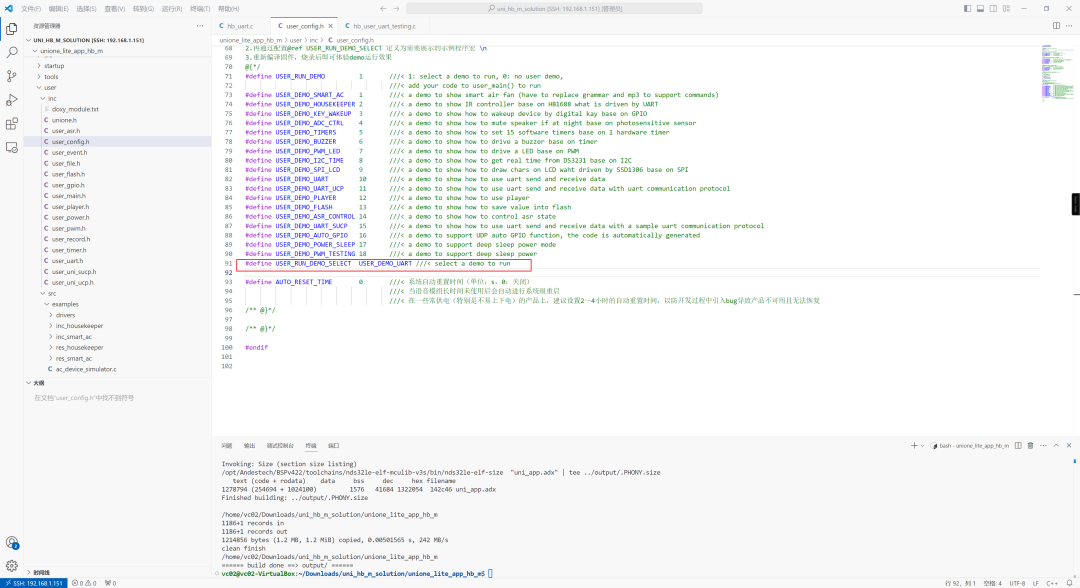
这样默认运行的程序就是
/home/vc02/Downloads/uni_hb_m_solution/unione_lite_app_hb_m/user/src/examples/hb_uart.c
代码如下所示
#include"user_uart.h"
#include"user_event.h"
#include"user_player.h"
#include"user_config.h"
#defineTAG"hb_uart_voice"
staticuni_pthread_tg_uart_thread_id =0;
staticboolg_uart_thread_running =false;
// 串口发送线程函数
staticvoid_uart_send_task(void*args) {
charbuf[6] = {1,2,3,4,5,6};
intret;
 g_uart_thread_running =true;
while(g_uart_thread_running) {
 LOGT(TAG,"UART send done, ret=%d", ret);
 uni_msleep(2000);// 每隔2秒发送一次
 }
}
// 创建发送线程
staticResult _create_uart_thread(void) {
if(g_uart_thread_running) {
 returnE_OK;
 }
 thread_param param;
uni_memset(¶m,0,sizeof(param));
 param.stack_size = STACK_SMALL_SIZE;
 param.priority = OS_PRIORITY_LOW;
uni_strncpy(param.task_name,"uart_voice",sizeof(param.task_name) -1);
if(0!=uni_pthread_create(&g_uart_thread_id, ¶m, _uart_send_task,NULL)) {
 returnE_FAILED;
 }
uni_pthread_detach(g_uart_thread_id); // 自动资源回收
returnE_OK;
}
// 停止发送线程
staticvoid_stop_uart_thread(void) {
if(!g_uart_thread_running)return;
 g_uart_thread_running =false;
if(g_uart_thread_id !=0) {
 uni_pthread_destroy(g_uart_thread_id);
  g_uart_thread_id =0;
 }
}
// 语音唤醒命令回调
staticvoid_on_wakeup_cmd_cb(USER_EVENT_TYPE event,user_event_context_t*context) {
if(context ==NULL)return;
event_goto_awakend_t*awake = &context->goto_awakend;
if(strcmp(awake->cmd,"wakeup_uni") ==0) {
  _create_uart_thread(); // 启动串口线程
 user_player_reply_list_random(awake->reply_files); // 播放语音回复
 }
}
// 自定义设置命令回调
staticvoid_custom_setting_cb(USER_EVENT_TYPE event,user_event_context_t*context) {
if(context ==NULL)return;
event_custom_setting_t*setting = &context->custom_setting;
if(strcmp(setting->cmd,"TurnOn") ==0) {
  _stop_uart_thread(); // 停止串口线程
 user_player_reply_list_random(setting->reply_files); // 播放语音回复
 }
}
// 注册语音事件回调
staticvoid_register_event_callback(void) {
user_event_subscribe_event(USER_GOTO_AWAKENED, _on_wakeup_cmd_cb);
user_event_subscribe_event(USER_CUSTOM_SETTING, _custom_setting_cb);
}
// 主入口
inthb_user_uart_voice_control(void){
if(0!=user_uart_init(NULL)) {
 LOGE(TAG,"UART init failed");
 return-1;
 }
 _register_event_callback();
return0;
}
其默认行为为创建线程定时发送数据, 然后使用LOG打印。但是它没办法调试。 因此我们做一点简单的修改, 当接受的数据的时候再发送出去。
// 串口发送线程函数
staticvoid_uart_send_task(void*args) {
charbuf[6] = {1,2,3,4,5,6};
intret;
 g_uart_thread_running =true;
while(g_uart_thread_running) {
  LOGT(TAG,"Voice triggered UART send [1, 2, 3, 4, 5, 6]");
  ret = user_uart_send(buf,sizeof(buf));
  LOGT(TAG,"UART send done, ret=%d", ret);
  uni_msleep(2000);// 每隔2秒发送一次
 }
}
2、编译和烧录
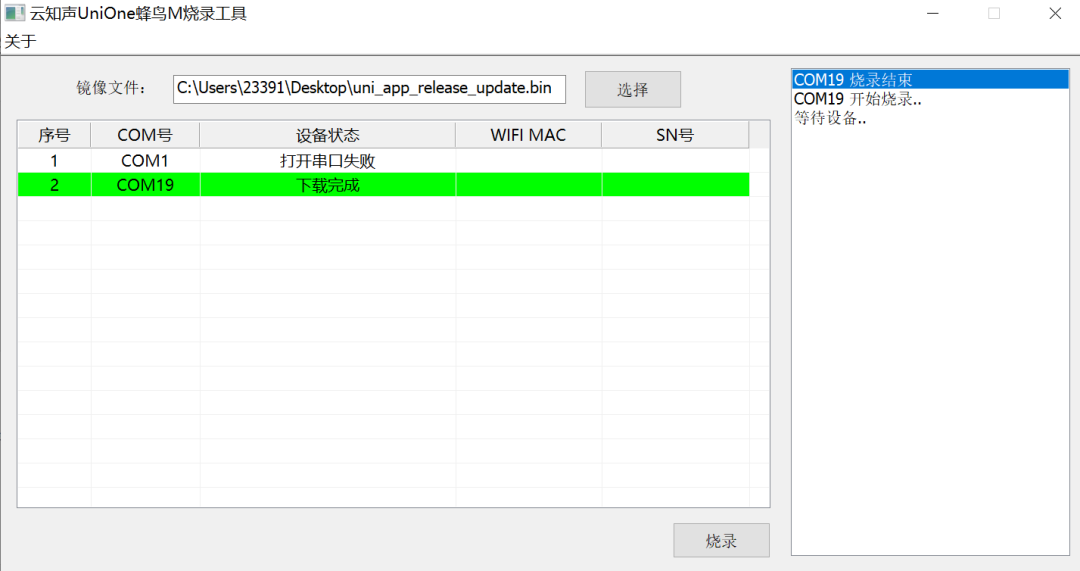
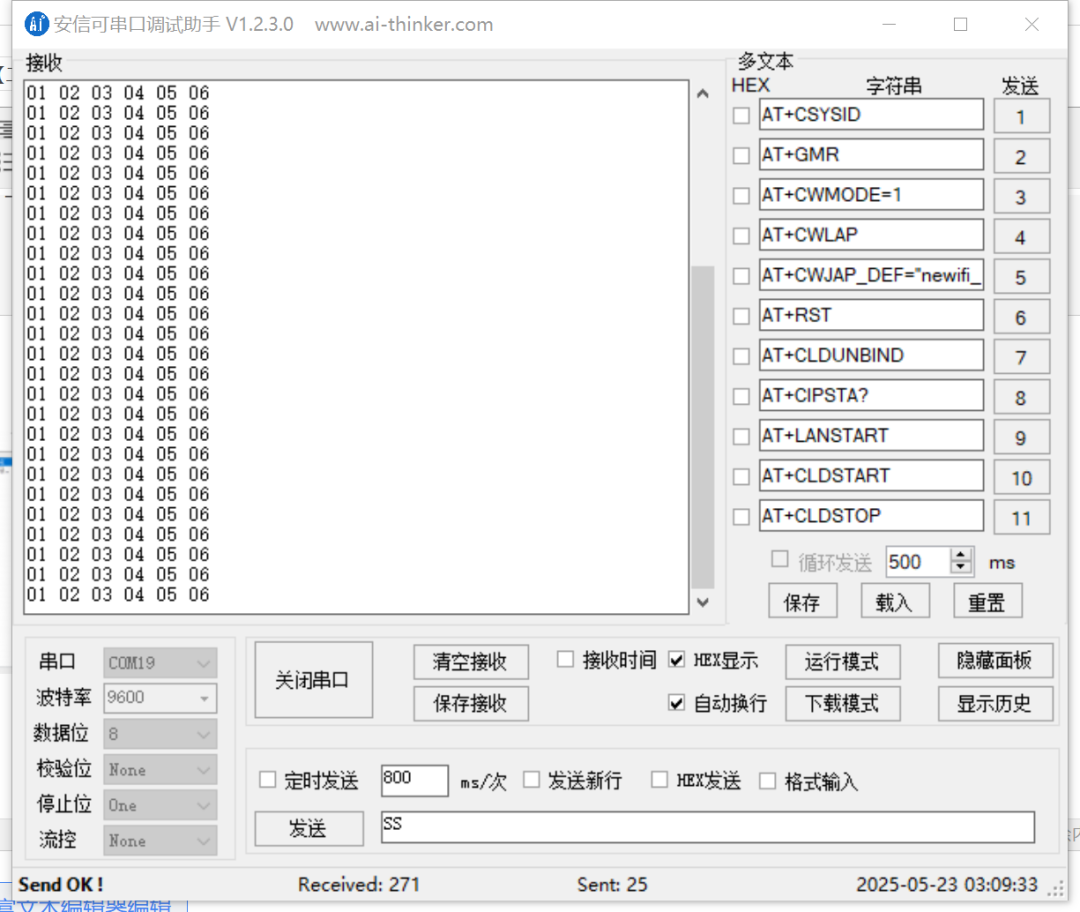
实验现象:串口以9600的波特率持续接收到数据 01,02,03,04,05,06 和程序中的数据对应,正确无误。
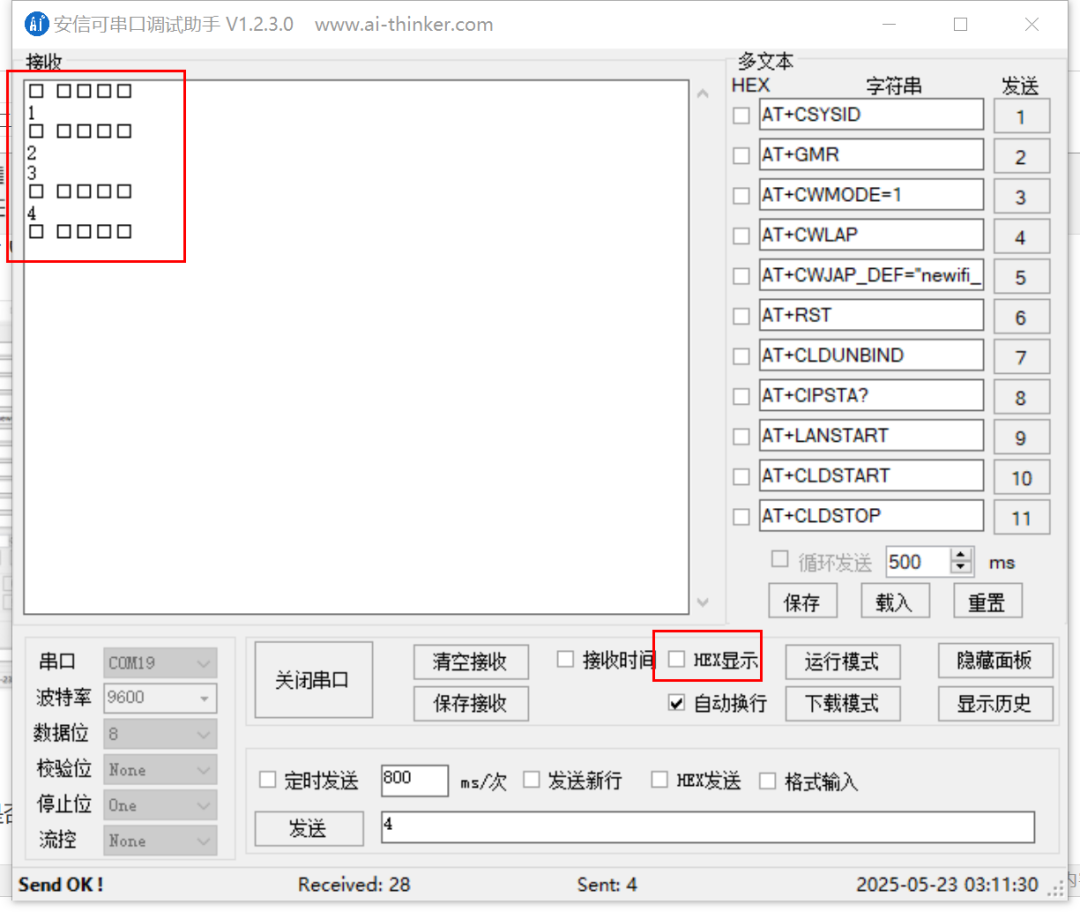
发送测试:之后尝试向其发送数据, 查看VC-02是否能正常转发回来(关闭HEX显示, 发送的数据和接受的一致)。
使用语音命令控制串口发送数据
1、创建文件
hb_user_uart_testing.c在/home/vc02/Downloads/uni_hb_m_solution/unione_lite_app_hb_m/user/src/examples下
#include"user_uart.h"
#include"user_event.h"
#include"user_player.h"
#include"user_config.h"
#defineTAG"hb_uart_voice"
staticuni_pthread_tg_uart_thread_id =0;
staticboolg_uart_thread_running =false;
// 串口发送线程函数
staticvoid_uart_send_task(void*args) {
charbuf[6] = {1,2,3,4,5,6};
intret;
 g_uart_thread_running =true;
while(g_uart_thread_running) {
 LOGT(TAG,"Voice triggered UART send [1, 2, 3, 4, 5, 6]");
  ret =user_uart_send(buf,sizeof(buf));
 LOGT(TAG,"UART send done, ret=%d", ret);
 uni_msleep(2000);// 每隔2秒发送一次
 }
}
// 创建发送线程
staticResult _create_uart_thread(void) {
if(g_uart_thread_running) {
 returnE_OK;
 }
 thread_param param;
uni_memset(¶m,0,sizeof(param));
 param.stack_size = STACK_SMALL_SIZE;
 param.priority = OS_PRIORITY_LOW;
uni_strncpy(param.task_name,"uart_voice",sizeof(param.task_name) -1);
if(0!=uni_pthread_create(&g_uart_thread_id, ¶m, _uart_send_task,NULL)) {
 returnE_FAILED;
 }
uni_pthread_detach(g_uart_thread_id); // 自动资源回收
returnE_OK;
}
// 停止发送线程
staticvoid_stop_uart_thread(void) {
if(!g_uart_thread_running)return;
 g_uart_thread_running =false;
if(g_uart_thread_id !=0) {
 uni_pthread_destroy(g_uart_thread_id);
  g_uart_thread_id =0;
 }
}
// 语音唤醒命令回调
staticvoid_on_wakeup_cmd_cb(USER_EVENT_TYPE event,user_event_context_t*context) {
if(context ==NULL)return;
event_goto_awakend_t*awake = &context->goto_awakend;
if(strcmp(awake->cmd,"wakeup_uni") ==0) {
  _create_uart_thread(); // 启动串口线程
 user_player_reply_list_random(awake->reply_files); // 播放语音回复
 }
}
// 自定义设置命令回调
staticvoid_custom_setting_cb(USER_EVENT_TYPE event,user_event_context_t*context) {
if(context ==NULL)return;
event_custom_setting_t*setting = &context->custom_setting;
if(strcmp(setting->cmd,"TurnOn") ==0) {
  _stop_uart_thread(); // 停止串口线程
 user_player_reply_list_random(setting->reply_files); // 播放语音回复
 }
}
// 注册语音事件回调
staticvoid_register_event_callback(void) {
user_event_subscribe_event(USER_GOTO_AWAKENED, _on_wakeup_cmd_cb);
user_event_subscribe_event(USER_CUSTOM_SETTING, _custom_setting_cb);
}
// 主入口
inthb_user_uart_voice_control(void){
if(0!=user_uart_init(NULL)) {
 LOGE(TAG,"UART init failed");
 return-1;
 }
 _register_event_callback();
return0;
}
输入上述代码, 其主要的业务逻辑就是通过唤醒命令来触发串口的定时输出,然后通过TrunOn的命令来关闭串口输出的线程。
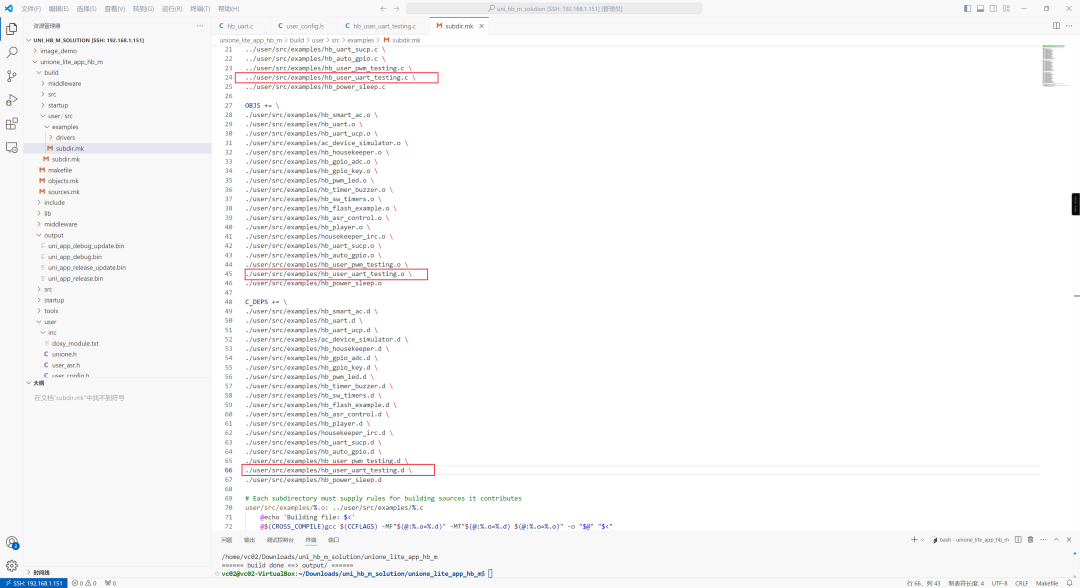
2、添加编译支持在
/home/vc02/Downloads/uni_hb_m_solution/unione_lite_app_hb_m/build/user/src/examples下的subdir.mk添加对当前编译文件的引用。
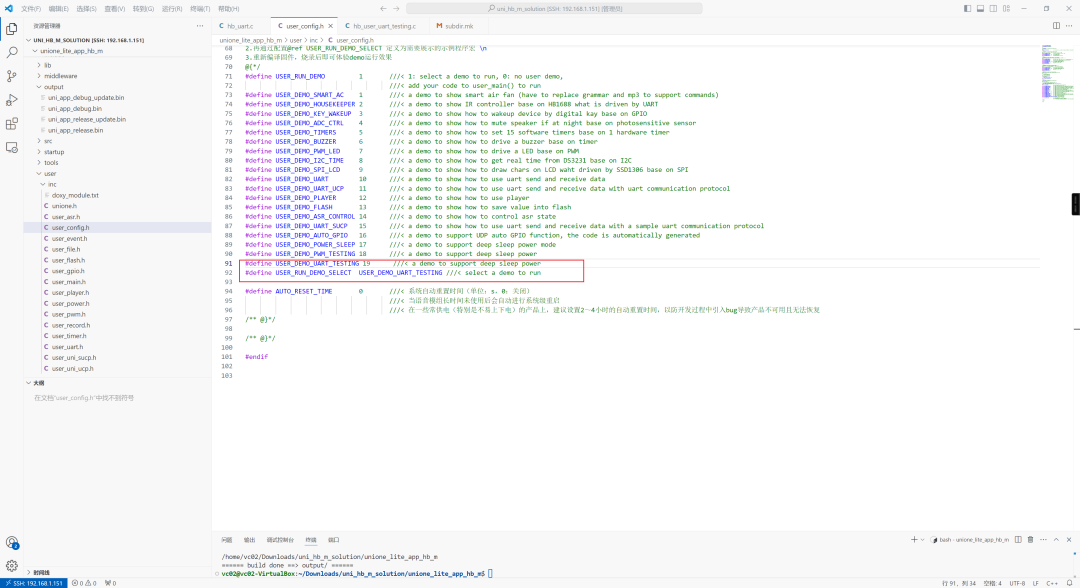
3、修改
/home/vc02/Downloads/uni_hb_m_solution/unione_lite_app_hb_m/user/inc/user_config.h文件, 增加对应的demo宏支持。
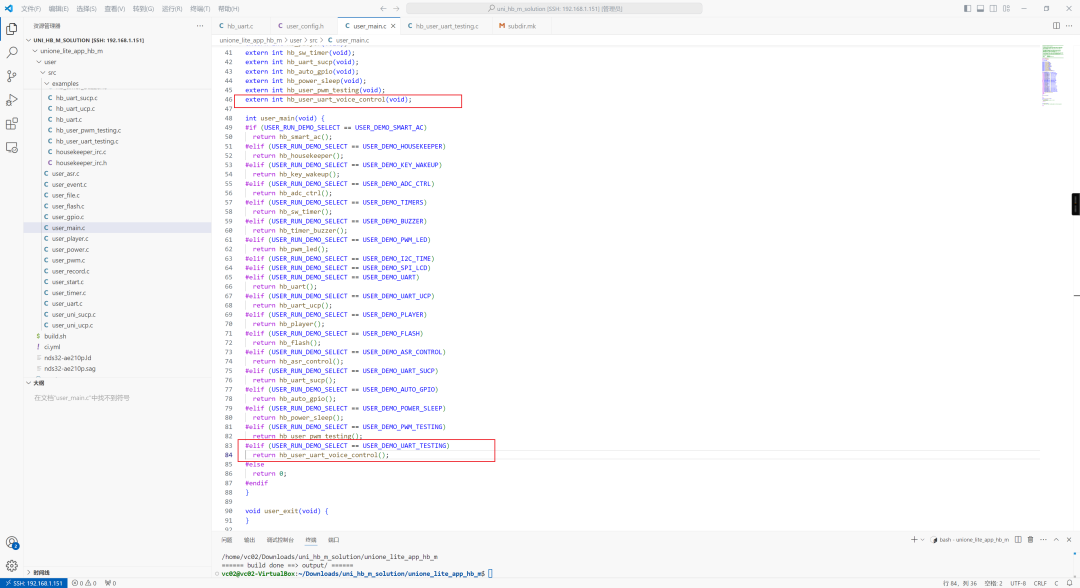
4、修改
/home/vc02/Downloads/uni_hb_m_solution/unione_lite_app_hb_m/user/src/user_main.c,增加对上述自定义宏的支持。
5-、编译并且烧录固件。
实验现象
烧录完成之后, 串口默认不输出任何数据。
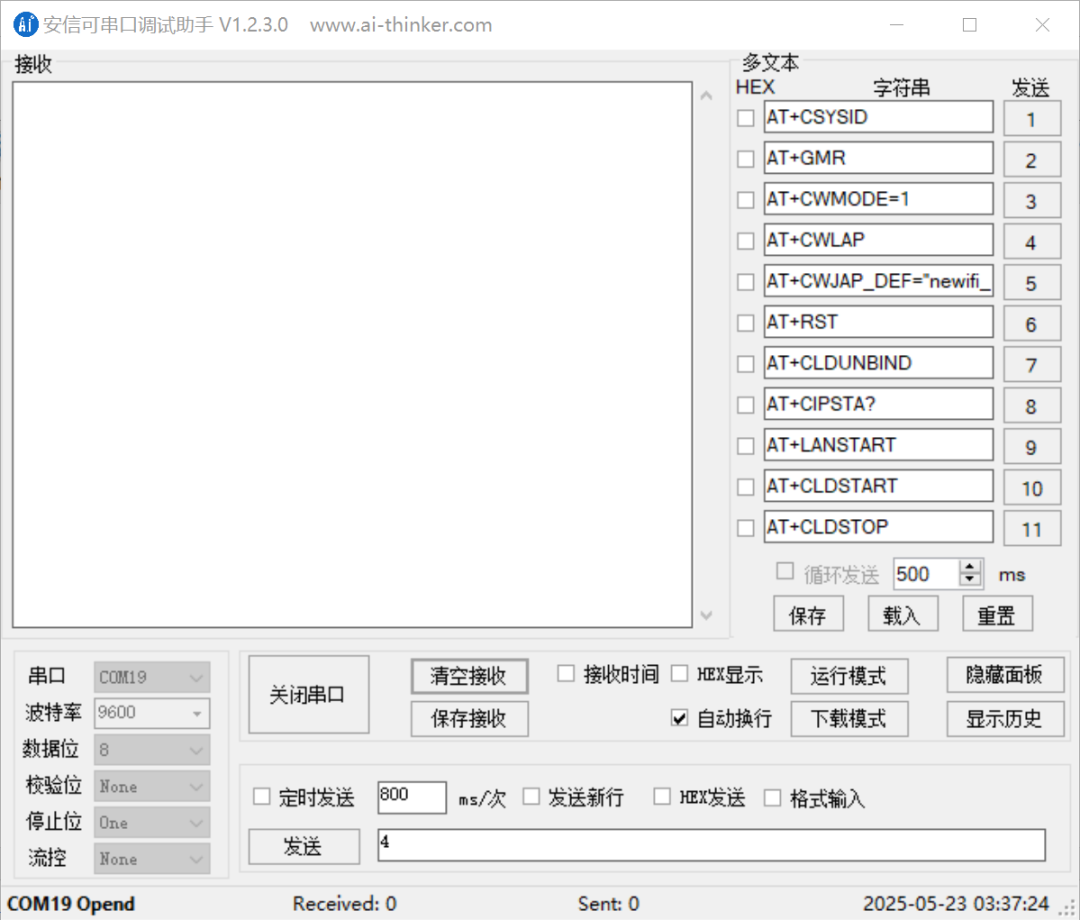
当识别到语音命令“你好小美” 之后将开始打印01 02 03 04 05。
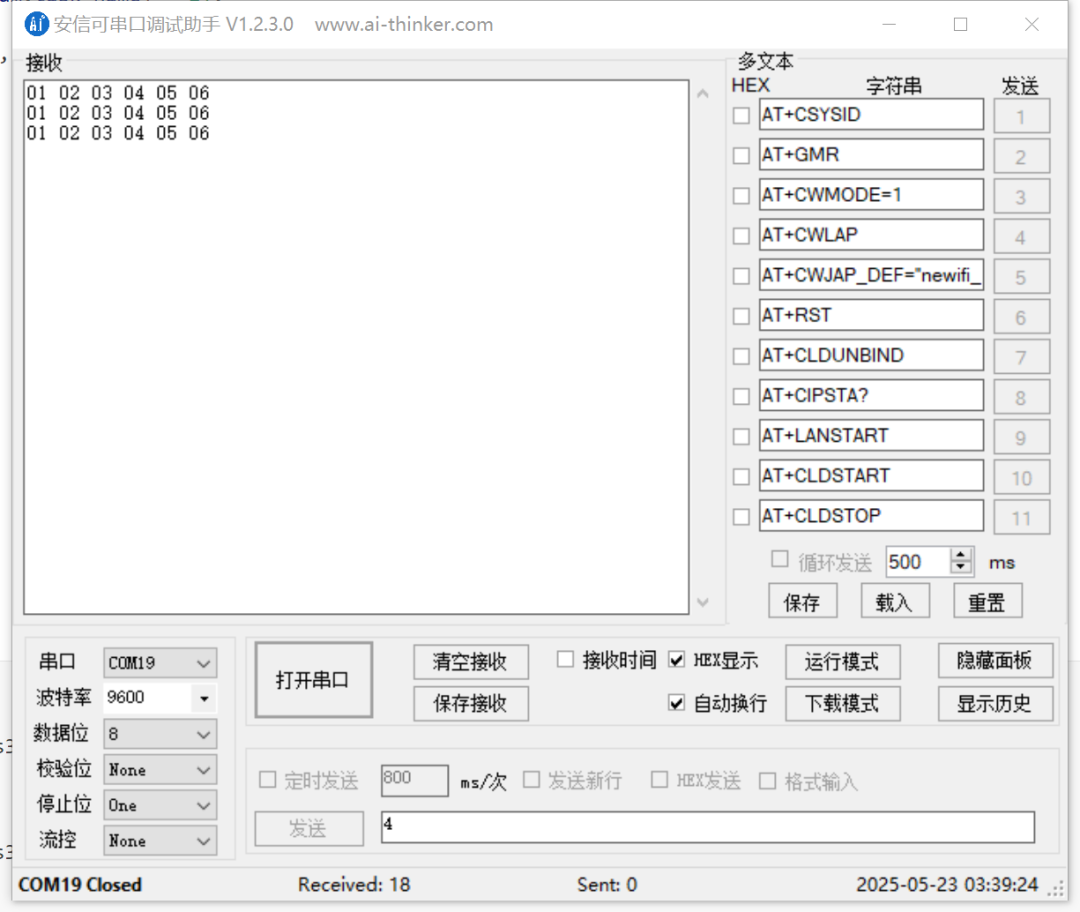
当识别到语音命令“打开灯光” 的时候将删除串口发送进程, 串口停止输出。
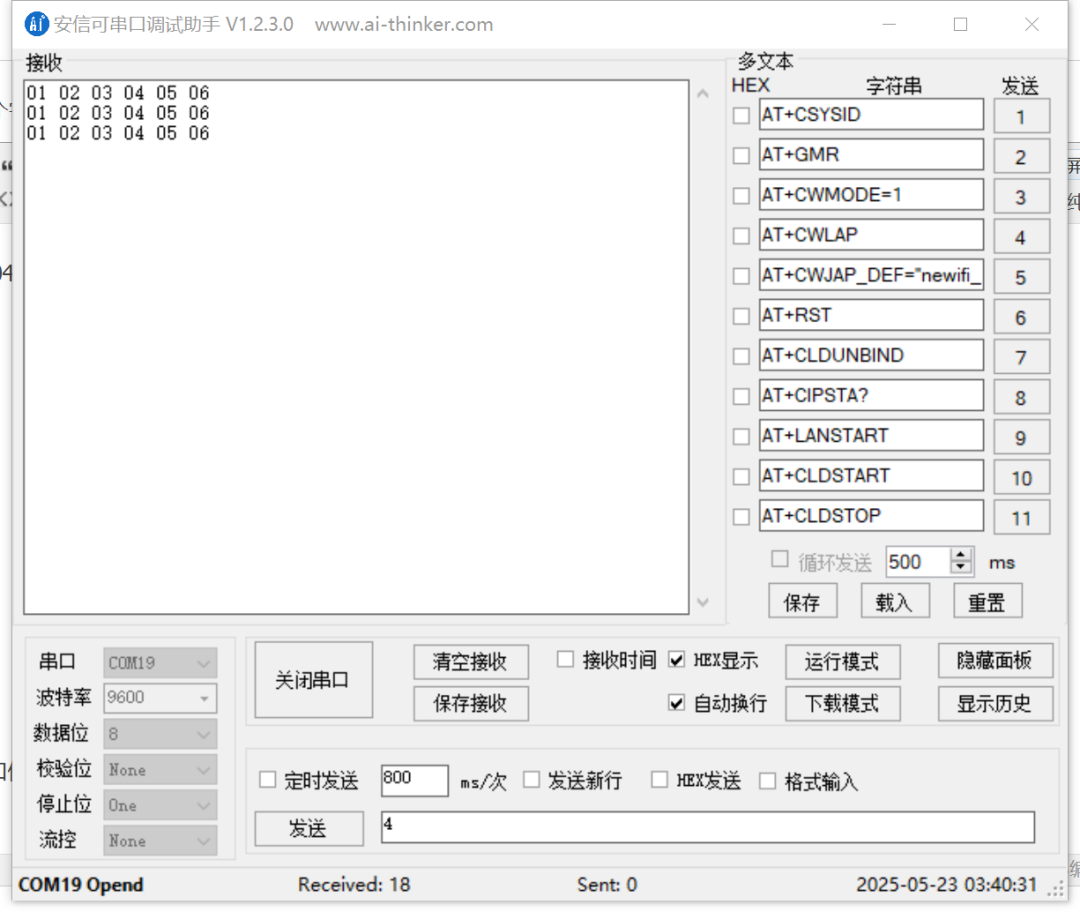
如上图所示, 此时的串口处于打开状态,但是没有输出数据。
-
PWM
+关注
关注
116文章
5847浏览量
223824 -
GPIO
+关注
关注
16文章
1313浏览量
55730 -
串口输出
+关注
关注
0文章
18浏览量
7789
原文标题:【离线语音】安信可VC-01/02二次开发篇: 串口输出
文章出处:【微信号:安信可科技,微信公众号:安信可科技】欢迎添加关注!文章转载请注明出处。
发布评论请先 登录
什么是语音芯片IC的串口通讯协议标准(AT)指令?

【大联大品佳 Nuvoton ISD9160语音识别试用体验】-深圳志芯
【大联大品佳 Nuvoton ISD9160语音识别试用体验】
基于n元语法模型的领域语音指令识别




KT148A语音芯片的下载用的是串口,测试可以直接串口发指令控制吗?
语音控制模块工作原理










 工商网监
工商网监
评论